 Giphy: host, server and search GIFs
Back of Envelope : 10 Billion content served every day.
Serving API is easy and efficient, But the real challenge is serving Images!!
- Because API responses are short.
- Because images/videos are large.
Hence to save them efficiently we need CDN.
What Giphy Caches on CDN ?
- Media Content - images, videos
- Search and discover API responses
/v1/gifs/trending
/v1/search?q=funny
Why CDN ?
-
Geographical Nearness
-
Every single server of cdn is called as edge server.
-
Content is served from the edge servers near to the user.
-
CDN is nothing but cache, it helps reduce response time as it’s edge server are near to the user.
-
CDN uses anycast network.
- Anycast
-
Ref: https://www.cloudflare.com/en-in/learning/cdn/glossary/anycast-network/
-
Anycast is a network addressing and routing method in which incoming requests can be routed to a variety of different locations or “nodes.” In the context of a CDN, Anycast typically routes incoming traffic to the nearest data center with the capacity to process the request efficiently. Selective routing allows an Anycast network to be resilient in the face of high traffic volume, network congestion, and DDoS attacks
-
How does Anycast work?
Anycast network routing is able to route incoming connection requests across multiple data centers. When requests come into a single IP address associated with the Anycast network, the network distributes the data based on some prioritization methodology. The selection process behind choosing a particular data center will typically be optimized to reduce latency by selecting the data center with the shortest distance from the requester. Anycast is characterized by a 1-to-1 of many association, and is one of the 5 main network protocol methods used in the Internet protocol.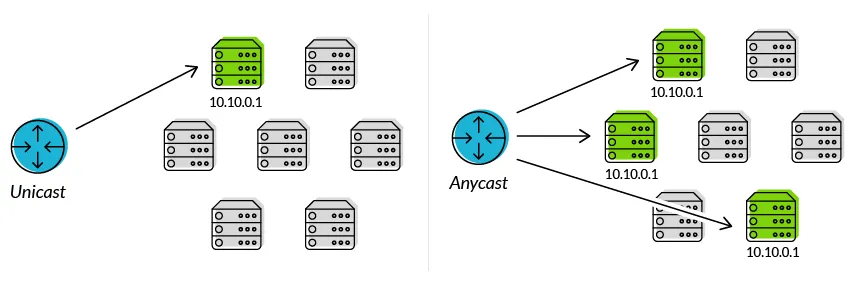
-
- Anycast
-
We can configure
max-ageands-maxagethat defines how long (in seconds) a response can be considered fresh by any cache (browser, CDN, proxy). -
Cache-Control: max-age=600
Drawbacks of Single Layer
-
Each Edge Server has its own cache. When content goes viral
- multiple edge gets request
- cache miss
- load on origin
-
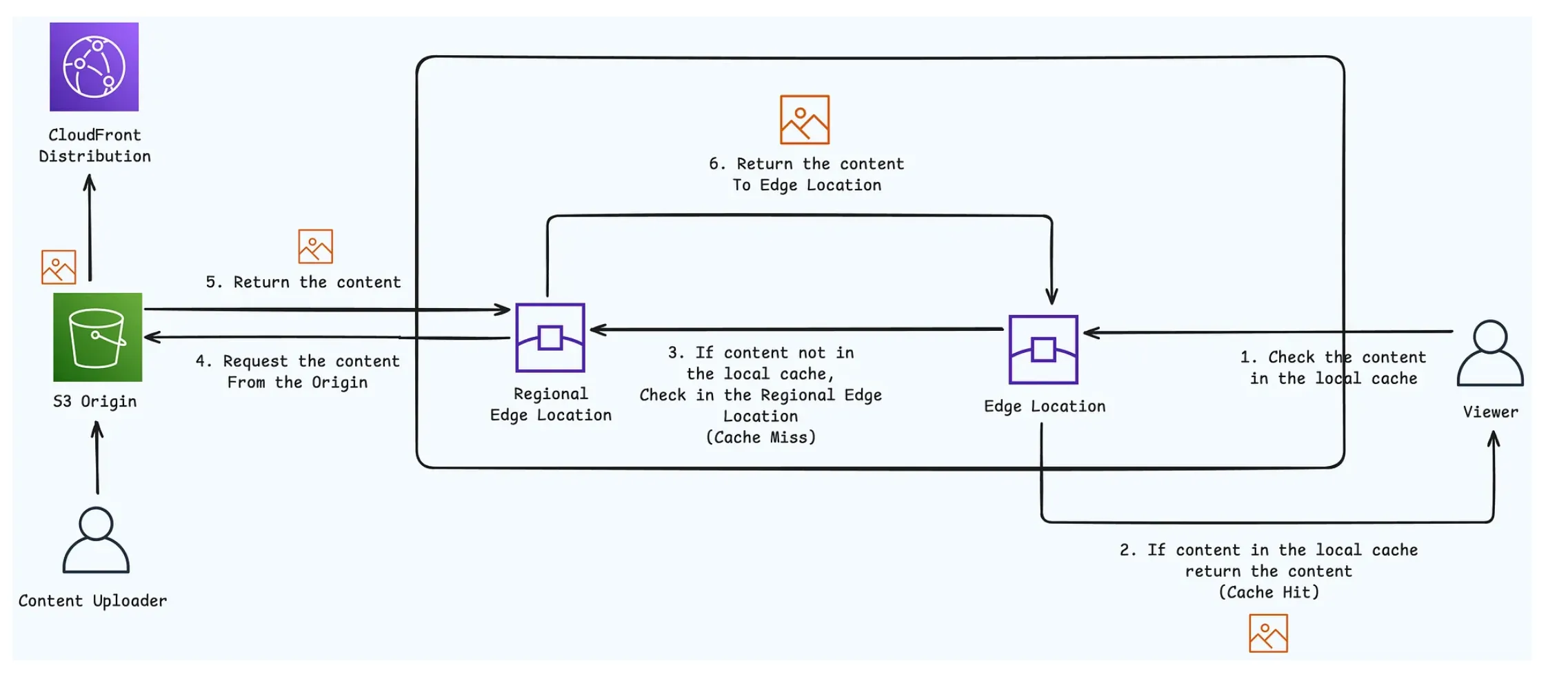
Solution (Multi-layer CDN)
- A shield server (sometimes called origin shield or shielding POP) is a designated caching layer inside the CDN that sits between:
- Edge nodes (closest to the user), and Your origin server (your API/backend).
- Its purpose is to reduce the number of direct requests to the origin and centralize origin fetches.
- Without shielding:
- Each edge POP (point of presence) makes requests directly to your origin.
- Example: if you have users in 50 regions → you could get 50 duplicate origin fetches when cache expires.
Other Approaches used by Giphy
- Route Specific TTL
- Response Configured Caching
- Response headers
max-ageands-maxagecan tell the CDN the duration of caching for specific Origin response.
- Response headers
- Cache Invalidation by grouping (can be achieved through surrogate keys)
- invalidate cached API responses that contains a specific GIF
- invalidate cached API responses where query contains word ‘w’
Ref:
- https://www.youtube.com/watch?v=-bo7oVejgRM
- https://www.cloudflare.com/en-in/learning/cdn/glossary/anycast-network/